Truck Maintenance Records: What the DOT Expects
A truck that is well maintained and badly documented is still a problem on audit day. The federal rules ask motor carriers to keep a paper trail for every vehicle, and they say how long to keep it. Here is what that trail has to contain.
What 49 CFR 396.3 requires
Under 49 CFR 396.3(b), a motor carrier must keep, for each vehicle it controls for 30 consecutive days or more:
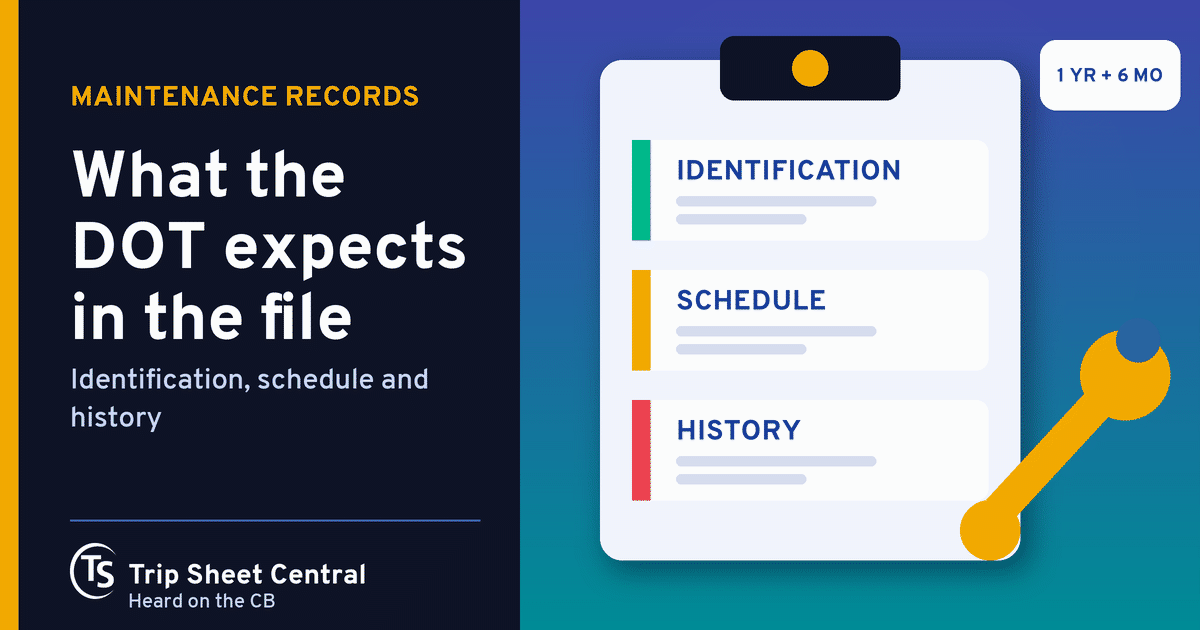
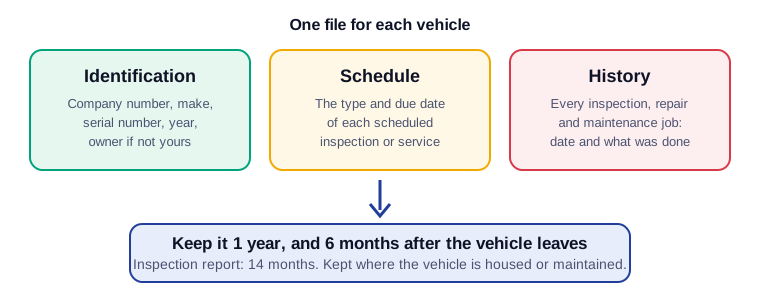
- Identification: the company number if the vehicle is marked with one, the make, serial number and year, and the owner's name if the carrier does not own it.
- A schedule: a way to show the type and due date of each inspection and maintenance operation that is scheduled.
- A history: a record of every inspection, repair and maintenance job, with its date and what was done.
How long to keep it
The periodic inspection report
A separate rule, 49 CFR 396.21, covers the periodic inspection report. The carrier keeps the report, or a copy, for fourteen months from the date of the inspection, at the place the vehicle is housed or maintained.
Receipts are the proof
A repair invoice or work order is the proof behind each line of the history. A job with no paper behind it is hard to defend, and the same invoice is also your deduction. The date, the shop, the odometer and the cost on one record serve both purposes.
Who this applies to
These sections are written for motor carriers. If you lease on to a carrier, ask what it needs from you and how it wants the paperwork delivered.
Keeping the history in Trip Sheet Central
A maintenance record holds the truck, the odometer reading, the repair facility, the type of work (parts, repair, DOT inspection, oil and lube and more), the service date, the cost and the invoice or work order, attached as a document. Each truck shows its own history, and the same records flow into your Profit and Loss. The app keeps what was done and when. The schedule of what is due next is still yours to track, so it helps to note the next service in the description.
The daily side
The file above is the long record. The daily record starts with the driver. Truck Topics covers the pre-trip inspection checklist and DVIR rules and what each level of roadside inspection checks.