How Long to Keep Trucking Records
Trucking creates a lot of paper: fuel receipts, rate confirmations, bills of lading, repair invoices, settlements, permits. How long should you keep it? Our advice is simple: keep all of it for at least seven years.
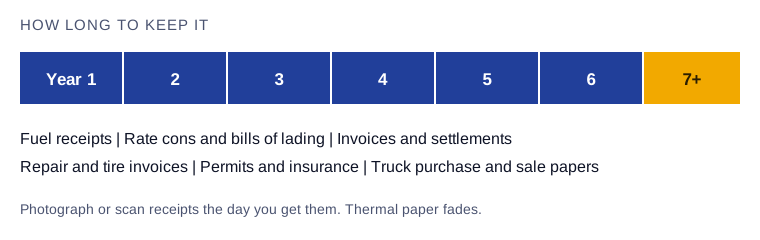
Why seven years
Tax returns, fuel tax returns and insurance and payment disputes each have their own time limits, and some of them run for years after you file. Rather than track a different clock for every record, keep everything for the longest period you are likely to need. Storage costs almost nothing, and the one time an auditor or a broker asks for an old document will pay for it. Better safe than sorry.
What to keep
- Fuel receipts and the miles by state that go with them.
- Rate confirmations, bills of lading and proof of delivery for every load.
- Invoices, settlements and payment records.
- Repair, tire and maintenance invoices, which also help the truck's resale value.
- Permits, registrations and insurance papers.
- Truck purchase and sale records, kept for as long as you own the truck and then for seven years after you sell it.
Paper that is easy to lose
- Thermal receipts fade. A receipt that has gone blank in a hot cab proves nothing. Photograph it the day you get it.
- Folders get wet, lost or left in a truck you sold. A photo or scan survives all three.
- Loose papers have no home. Attach each document to the trip it belongs to.
Keep it where you can find it
Seven years of records only help if you can find the one you need. Trip Sheet Central keeps trips, fuel, expenses and documents together, so a receipt or bill of lading from years back is a search away. Scan receipts from your phone and attach documents to the trip as you go. See also what a trip sheet is and why you need one and the IFTA quarter-end checklist.