What Is a Trip Sheet and Why Every Trucker Needs One
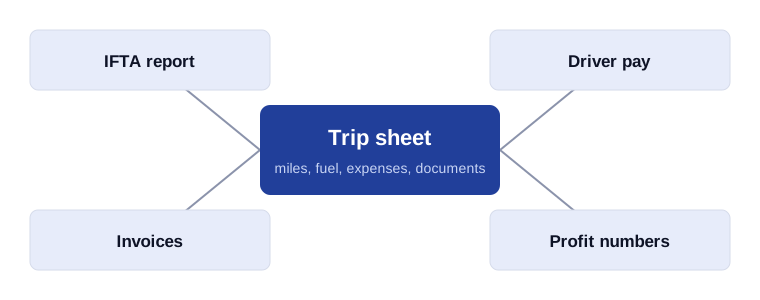
A trip sheet is the record of one load or one trip, start to finish. Everything else in a small trucking business is built from it: your fuel tax return, your invoices, your driver pay and your profit numbers. If the trip sheet is right, the rest takes minutes. If it is wrong or missing, you rebuild it from memory at the worst possible time.
What goes on a trip sheet
- The load. Broker or shipper, pickup and delivery, dates, load or reference number and the rate.
- The miles. Total miles, and the miles driven in each state. State miles are the heart of the IFTA return.
- The fuel. Date, state, gallons and cost for every fill-up.
- The expenses. Tolls, scales, lumpers, parking and repairs tied to that trip.
- The paperwork. The rate confirmation, the bill of lading and the proof of delivery.

Why it matters
Fuel tax. IFTA is figured from miles and fuel by state. Records built trip by trip are what you rely on if a state ever asks questions.
Getting paid. An invoice needs the load details and the signed proof of delivery. When they are attached to the trip, billing takes a minute and fewer invoices come back with questions.
Knowing what a load really paid. A $2,000 rate looks good until fuel, tolls and driver pay come out. Trip by trip, you see which brokers and lanes make money and which only keep you busy.
Paying drivers and owner-operators. Pay is calculated from trips, so a clean record means fewer disputes.
Paper, spreadsheet or software
Paper works until the folder gets wet or lost. A spreadsheet works until you have a few trucks and a few hundred trips. Software that keeps trips, fuel, documents and invoices together saves the retyping, which is where the mistakes come from.
In Trip Sheet Central you can start a trip from a rate confirmation or bill of lading, scan receipts from your phone, and attach documents to the trip. The IFTA report and your profit numbers come from the same entries, so you enter the information once.
Good habits, whatever you use
- Start the trip record when you accept the load, not when you deliver it.
- Photograph every receipt the day you get it.
- Enter miles by state at the end of each trip while you still remember the route.
- Close out the trip as soon as you are paid, and note any short pay.
Related reading: IFTA quarter-end checklist and how to pay OTR drivers and owner-operators.