Rate Confirmation Checklist: What to Check Before You Accept
A rate confirmation is the contract for one load. Once you sign it, it decides what you will be paid, when, and what happens if something goes wrong. Reading it takes two minutes, and it is much cheaper than a dispute later. Here is what to check before you accept.
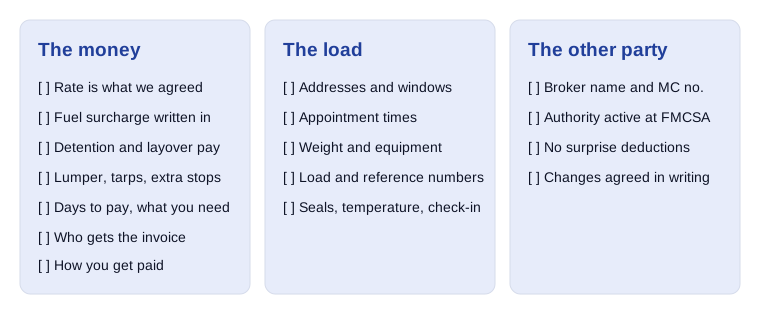
The money
- The rate matches what you agreed on the phone, and says whether it is flat or per mile.
- Fuel surcharge, if one was promised, is written in. See our post on fuel surcharge.
- Extra pay for detention, layover, lumper fees, tarps, stops or driver assist is stated, not left to later.
- Payment terms. How many days you will be paid in, and what the broker needs from you first. Details in the section on invoicing below.
The load
- Pickup and delivery addresses and windows, with the appointment times.
- Weight, commodity and equipment type match your truck and your authority.
- Load and reference numbers are on it. You will need them on the invoice.
- Special instructions, such as temperature, seals, lumper required or check-in procedures.
The other party
- The broker's name and MC number are correct. Check the authority is active with FMCSA before you take the load. We cover how in is your freight broker legit.
Who gets the invoice, and how you get paid
This is the part most rate confirmations leave vague, and it decides how fast the money arrives. Find these answers before you accept the load:
- Who receives the invoice. Many brokers want it sent to a billing email address or uploaded to a payment portal, not to the dispatcher who booked the load. Some use a separate billing company. Write down exactly where it goes.
- What to send with it. Usually the invoice, the signed proof of delivery and the rate confirmation, all with the load number on them. A missing document is the most common reason payment stops.
- When the clock starts. Payment terms such as net 30 normally count from the day the broker receives your complete paperwork, not from delivery.
- How you are paid. ACH deposit, check or a pay card, and who to call when it is late.
- Quick pay options. Some brokers offer faster payment for a percentage fee. If you use one, work out what it costs on this load before you agree.
- Factoring. If a factoring company buys your invoices, the invoice and the payment go to the factor, and the rate confirmation may need a notice of assignment. Make sure the broker has your current instructions.
When the load is on a trip sheet, the broker, the load number and the documents are already together, and you can create the invoice from the trip and see which ones are still unpaid.
Watch for fine print
Read for clauses about deductions, such as fees for paperwork that arrives late, charges for tracking apps, or a right to change the rate after delivery. If a term is not what you agreed, get it changed in writing before you move the truck.
Then put it on the trip sheet
Once you accept, record the load right away. In Trip Sheet Central you can start a trip from a rate confirmation: attach the document and the load details, broker and rate are ready to review. Everything you check above then travels with the trip, so invoicing and any later question are quick. See what a trip sheet is for the whole picture.